| |
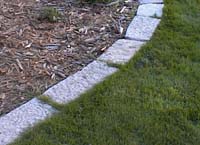
Edging (in this case, a cut rock mowing strip) neatly separates lawn from planting beds.
|
Edging Styles
Most mulched beds require an edge to keep the wood chips off the adjacent lawn or pavement.
Edging materials and methods range from the creeping-weed-proof barrier of continuous laid
cement to the more permeable and perhaps more friendly row of bricks on a bed of sand. The
choice is yours and will spring from your personal style, but here are some things to consider
when designing and laying your edge:
- Smothering your lawn will raise
the level of the new bed above the adjacent lawn or pavement; a raised edge can keep the
mulch from sliding out of the bed.
- If your bed borders a lawn, mowing will be made easier
by using an edge roughly eight inches wide and sinking it nearly level with the ground on the
lawn side. This is sometimes called a mowing strip,
and it can be used alone or set next to a raised edge (on the lawn side, naturally).
- If your bed borders pavement, a raised edge may keep storm runoff in the pavement rather than directing it into the plantings where it can be absorbed. This is a significant issue in heavy rains when streams of water might impede traffic on your sidewalk, in cold climates where winter freezing will wear the paving sooner, and when your paving is set on a sand base that might be damaged by heavy runoff. Better in these cases to edge your bed with a drainage channel alongside the pavement.
Smother or Edge First?
You may want to consider edging your new planting bed before smothering it, depending on
the desired height of your edging.
To edge first, dig a trench around the edge of your new bed and fill it with sand
(a bed for bricks) or cement. Make sure to calculate the depth of your trench based on how
tall your edging materials are and how tall you want your bed edging to be relative to your
mulch. Lay the newspapers up to the ditch or even extend them across it, then set the edging
bricks or cement. Spread the mulch up to the edging.
This is an excellent option if you've decided to install a mowing strip, but bare mulch will tend to slide across a low edging onto the adjacent
pavement or lawn.
To smother first, lay your newspapers, spreading them to the outer edges of the new
bed, and place edging materials on top of the papers. Spread mulch up to the edging
materials.
This may work best for raised edging.
|